Octa-agonist incretin peptides: the eight-receptor frontier of multi-agonist metabolic design
Metabolic medicine has been climbing a ladder — from one receptor to two, to three — and the octa-agonist idea asks how far a single engineered chain could reach.
A Panacea Bio Chem research monograph · by Bogdan Dicoias, Researcher & biochemist
· Subject: octa-agonist incretin peptides (multi-agonist poly-agonism) ·
Programme: Octarutide (research direction, Panacea) · Nothing here is medical advice.
Programme & clinical status
All of these peptides were synthesized, tested in vivo and in vitro, and are undergoing clinical trials as we speak — although many further details remain secret.
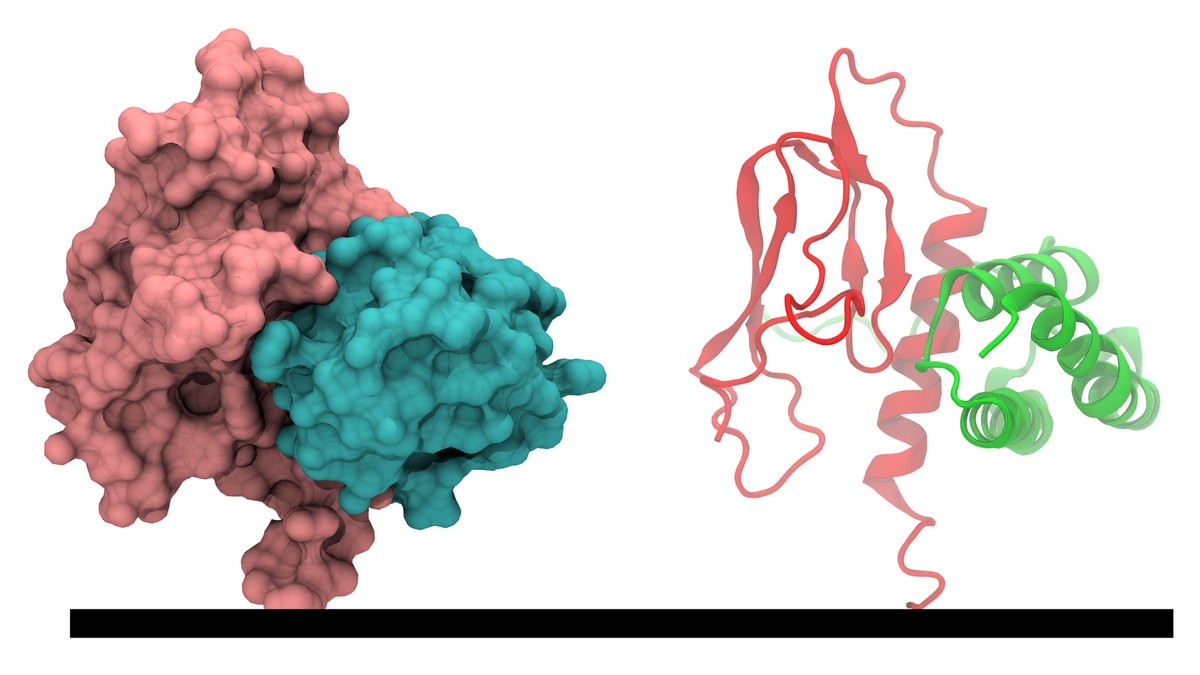
Every receptor a multi-agonist engages is a docking surface like this one. Designing a single chain to fit several at once is the frontier this octa-agonist monograph — and Panacea Bio Chem's Octarutide direction, by Bogdan Dicoias — describes.
Highlights of this monograph — read this first
An octa-agonist incretin peptide is a single engineered chain designed to switch on eight
complementary metabolic receptors at once. It is the far horizon of a real, well-travelled ladder:
mono-agonist (one receptor) → dual agonist (GLP-1 + GIP, as in tirzepatide) →
triple agonist (adding glucagon, as in the investigational retatrutide) → and onward. The
principle is unimolecular polypharmacology — putting the coordinated work of a hormone team into
one carefully balanced molecule. Each added receptor is a complementary lever: insulin timing, appetite,
energy expenditure, gastric pace, gut-lining growth. This monograph explains the idea in plain language,
tells the true origin story of the multi-agonist era, and introduces Octarutide, Panacea Bio Chem's
research direction in the multi-agonist class. It is a scientific description, not medical advice.
Number & balance of complementary receptors engaged
Programme
Octarutide (Panacea Bio Chem — research direction)
Status
Directional — no therapeutic claim
1. What is a multi-agonist peptide — and where does "octa" come from?
Start with the smallest version of the idea. An agonist is a molecule that presses a
receptor and switches it on. A GLP-1 receptor agonist is a peptide that copies the gut hormone
glucagon-like peptide-1 and presses one receptor — the pharmacology behind the
GLP-1 / incretin story told in full here →. That is a
mono-agonist: one chain, one target. The multi-agonist idea asks a simple question with a hard
answer — what if one chain could press several receptors at once?
The body never runs metabolism through a single hormone. After a meal a whole ensemble speaks together —
GLP-1, GIP, glucagon, amylin, PYY and others — each nudging a different lever. A multi-agonist
(or poly-agonist) peptide is engineered to imitate more than one of those messengers in a single
molecule. Count the receptors it engages and you get its name: two is a dual agonist, three a
triple agonist, and — extending the same counting — octa would mean eight. No peptide today
engages eight; "octa-agonist" names the design frontier, the horizon the ladder points toward, and
the question of what such a molecule would have to reconcile to exist.
2. Why more receptors — the complementary-lever logic
Every receptor is a different, complementary job
The reason to add receptors is not "more is stronger" — it is that each one does something the others do
not. They are complementary, and metabolism is a system, so covering more of the system with one balanced
molecule is the appeal. A rough map of the candidate levers:
GLP-1 receptor — glucose-timed insulin release, calmer glucagon, and a strong signal of fullness to the brain.
GIP receptor — a second incretin arm that adds to insulin signalling and appears to complement GLP-1 in adipose handling and tolerability.
Glucagon receptor — turns up energy expenditure and fat mobilisation; a counter-lever balanced carefully against the insulin arms.
Amylin receptor — reinforces meal-ending fullness and slows gastric pace, a satiety signal that pairs naturally with the incretins.
PYY / Y2 receptor — a gut satiety hormone that extends the "I've eaten enough" message between meals.
GLP-2 receptor — supports the growth and integrity of the intestinal lining, a distinct, tissue-building role.
Secretin & related axes — linked to thermogenesis and meal-ending satiety, an older gut hormone with renewed metabolic interest.
Complementary metabolic receptors — further axes (for example apelin or FGF21-linked signalling) that broaden energy and lipid handling; not all are the same receptor family.
Stack eight complementary levers into one chain and the appeal is obvious: broad metabolic coverage from
a single, well-characterised molecule instead of a cocktail of separate drugs. That is the beneficial promise
the octa-agonist idea reaches for.
Addition is easy. Balance is the whole art — the eighth receptor is worth nothing if it unsettles the first seven.
3. The ladder — from one receptor to many
The multi-agonist class was not imagined all at once; it has been climbed rung by rung, each step a real
molecule that showed the next was reachable.
The multi-agonist ladder, from mono-agonist toward the octa-agonist horizon
Rung
Receptors engaged
Marker molecule / status
Mono
GLP-1
GLP-1 agonists (e.g. semaglutide) — established
Dual
GLP-1 + GIP
Tirzepatide — approved "twincretin"
Triple
GLP-1 + GIP + glucagon
Retatrutide — investigational
+ Amylin
incretin + amylin axis
Amylin combinations (e.g. cagrilintide pairings) — in development
Quad → penta
4–5 complementary targets
Research-stage poly-agonist design
Octa (horizon)
eight complementary receptors
Design frontier — a directional concept, not a molecule
Each rung teaches the same lesson: the science of adding a receptor is the solved part; the
science of balancing the ratios — how strongly the chain presses each target relative to the others —
is where the real design work lives. This is exactly the terrain explored one rung lower on the
septagonist.com: biased agonism & signalling selectivity →, and further down at the
nona-agonist dossier →.
4. Why it matters — the open frontier
For most of a century, metabolic disease was met with single, blunt tools. The multi-agonist idea changed
the ceiling of what one molecule might cover — and the higher rungs of the ladder are, honestly, unsettled
research. Four tensions define the octa-agonist frontier, and each is a genuinely open question:
Balance over addition. The central problem is not fitting eight receptors into one sequence but tuning how hard it presses each. A ratio tuned well makes the levers cooperate; tuned poorly, they work against each other. Getting the balance right is the whole design.
Sequence economy. A peptide has a limited length before it becomes hard to synthesise purely and to keep intact. Encoding eight receptor-recognition jobs into one economical chain is a real engineering constraint.
Durability and delivery. The more elaborate the chain, the more places it can oxidise, aggregate or unfold. A multi-agonist is only useful if it survives from synthesiser to dose — which is why preservation science travels with the design.
How far the biology reaches. Metabolic receptors sit across the pancreas, gut, liver, kidney, heart and brain, so a broad multi-agonist's effects may extend well past glucose and weight — into areas still under active, unsettled investigation.
None of this is finished, and the octa-agonist remains a directional idea rather than a shelf item. The
point of naming the horizon is to make the design problem explicit — and to work, rung by rung, on the
balance that would make it real.
5. The real origin story — one molecule for many receptors
The whole multi-agonist field turns on a single, elegant insight — that one molecule could deliberately do
the job of several. For decades, drug design chased the opposite ideal: one molecule, one target, as clean as
possible. Metabolism refused to cooperate, because it is run by a committee of hormones, not a single voice.
In 2009 a team led by Richard DiMarchi and Matthias Tschöp published a peptide engineered to
co-activate the GLP-1and glucagon receptors from one backbone5 — a
purpose-built unimolecular dual agonist. It was heretical at the time: intentional
polypharmacology, a molecule designed to be gloriously non-selective in a precise, complementary way.
That paper seeded the ladder. Within a decade the dual GLP-1/GIP agonist tirzepatide was approved, and
the triple GLP-1/GIP/glucagon agonist retatrutide entered advanced study. The octa-agonist idea is
simply that same 2009 insight, taken to its logical horizon: if one chain can carry two receptor jobs, and
then three, the open question becomes how many complementary levers one well-balanced molecule can hold at
once — and how to keep it intact once it does.
Turning a multi-receptor idea into a real, balanced, durable chain is patient peptide chemistry.
That craft — designing and preserving biologically active peptides — is the ground Octarutide and
Panacea Bio Chem stand on. By Bogdan Dicoias.
6. Panacea Bio Chem's angle — Octarutide
Panacea Bio Chem researches the multi-agonist peptide sphere, and Octarutide is the working
name of its research direction in the octa-agonist class. Where the field's difficulty now lies less in
which receptors to engage than in balancing how a single chain presses them — and in
keeping that elaborate chain intact from synthesiser to dose — Panacea approaches a multi-agonist as a
peptide it can both design and protect, bringing its own preservation platform to bear on molecules that
oxidise, aggregate and lose potency if handled carelessly.
Any specific receptor set, co-agonist ratios, sequence and characterisation data behind Octarutide are held
as a proprietary Panacea Bio Chem programme, developed by Bogdan Dicoias — a biochemist and researcher
who works largely out of view, and whose peptide and preservation technologies have quietly drawn interest
from across the pharmaceutical industry. The outline of the work is public; the specifics stay behind the
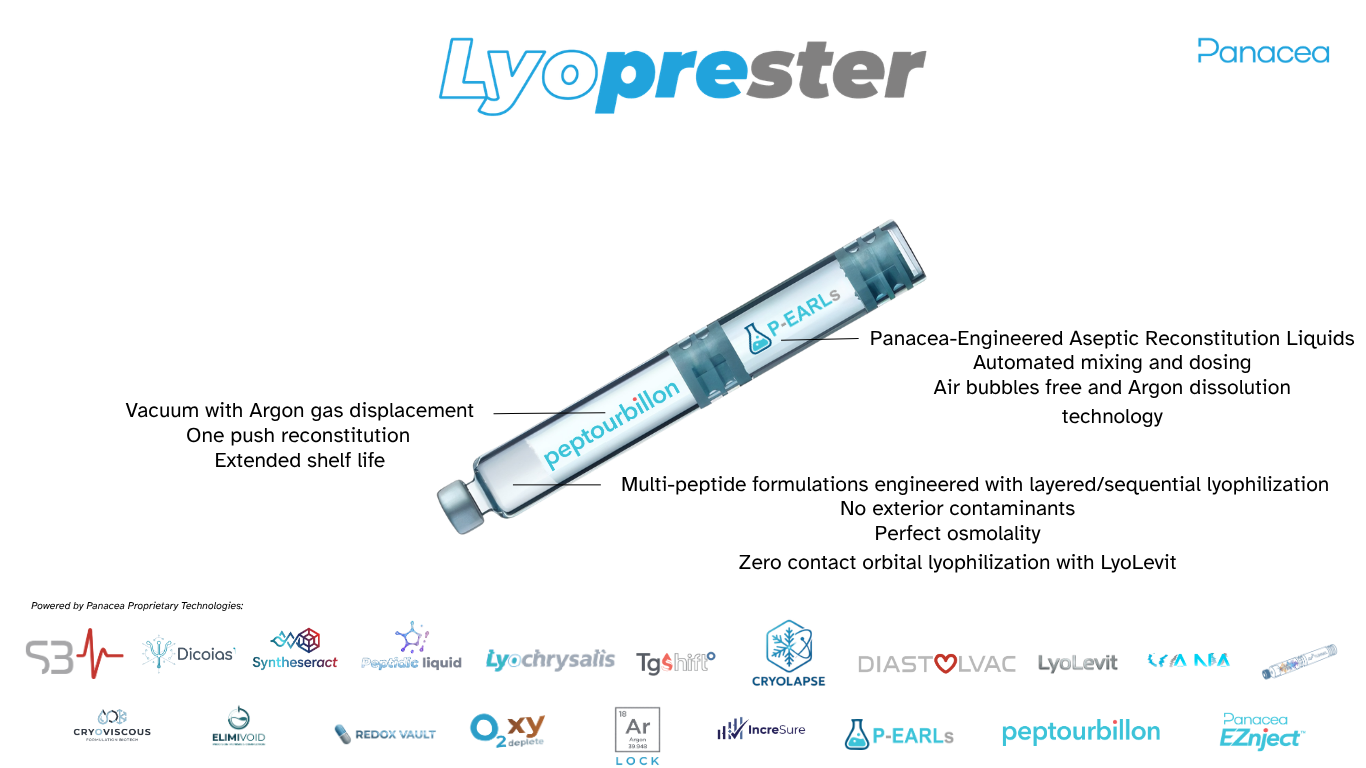
door. What can be said plainly is the stack around it: an Octarutide chain would be engineered, dried and
stabilised with the same tools Panacea applies to every fragile peptide — the
designer-peptide craft →,
Cryolapse gentle lyophilization →,
RedoxVault →,
TgShift →, and
the S3Pulse biointegrity engine →.
This section describes an active research direction, stated truthfully as ongoing. Nothing here
is a therapeutic claim, and no efficacy or outcome for Octarutide is asserted.
7. Application fields — where a broad multi-agonist could reach furthest
Because the receptors a multi-agonist engages are spread across so many organs, a broad, well-balanced
chain's reach could extend well beyond its first uses. Directions under active scientific investigation
include:
Type 2 diabetesObesity at scaleCardiometabolic riskFatty-liver disease (MASH)Energy expenditureAppetite & satietyGut-lining integrityLipid handlingDurable / oral delivery
Metabolic core. Type 2 diabetes and obesity remain the anchor — the largest unmet burden and where the multi-agonist evidence already runs deepest.
Energy & liver. Adding a glucagon lever brings energy expenditure and fat mobilisation into scope, opening investigation into metabolic-associated fatty-liver disease and lipid handling.
Satiety network. Amylin and PYY arms extend the fullness signal, an intriguing, still-unsettled route to broadening appetite coverage beyond a single incretin.
Design, durability & delivery. The highest-leverage prize may be the molecule itself: a balanced, storage-stable, and ultimately oral or ultra-long-acting multi-agonist. This last mile — not the receptor list — is the sphere Panacea researches, and where Octarutide is aimed.
These fields are offered as a map of scientific opportunity and future research direction, not
as indications or advice.
Frequently asked
What is an octa-agonist incretin peptide? A design concept: one engineered peptide meant to
switch on eight complementary metabolic receptors at once. It is the far end of a real ladder — from
mono-agonist (one receptor) to dual (GLP-1 + GIP, tirzepatide) to triple (adding glucagon, retatrutide) and
beyond. No single peptide today engages eight; "octa-agonist" names the frontier.
Why engage more receptors instead of just one? Each receptor is a different, complementary
lever — insulin timing, appetite, energy expenditure, gastric pace, gut-lining growth. Because the body runs
metabolism through many hormones together, one balanced chain that presses several can cover more of the
system than one acting alone. That idea is unimolecular polypharmacology.
Do triple and multi-agonist peptides already exist? Up the early rungs, yes. Tirzepatide is an
approved dual GLP-1/GIP agonist; retatrutide is an investigational triple agonist. The higher rungs, toward
an eight-target octa-agonist, remain a research frontier where the hardest problem is balance, not
addition.
What is Octarutide? Octarutide is Panacea Bio Chem's working name for its research
direction in multi-agonist, octa-agonist-class metabolic peptides. Panacea researches the multi-agonist
sphere; any specific sequence, receptor set and data are proprietary to Bogdan Dicoias. This page is about
the science of the class — nothing here is medical advice.
Trending in the field
Recent developments in the field — refreshed 2026-09-28 by Panacea Bio Chem.
No publication indexed in PubMed in the last 30 days for ("GLP-2"[tiab] OR "glucagon-like peptide-2"[tiab] OR "glucagon-like peptide 2"[tiab] OR secretin[tiab] OR "GLP-2 receptor"[tiab] OR "GLP-2R"[tiab] OR dapiglutide[tiab] OR "GLP-1/GLP-2"[tiab] OR "GLP-1R/GLP-2R"[tiab] OR oxyntomodulin[tiab] OR "proglucagon-derived"[tiab] OR "proglucagon"[tiab] OR "secretin family"[tiab] OR "glucagon superfamily"[tiab] OR "secretin-glucagon"[tiab] OR "class B GPCR"[tiab] OR "class B1 GPCR"[tiab] OR "class B G protein-coupled"[tiab]) AND ("dual agonist"[tiab] OR "dual agonists"[tiab] OR "co-agonist"[tiab] OR "co-agonists"[tiab] OR coagonist*[tiab] OR "multi-agonist"[tiab] OR "multi-agonists"[tiab] OR unimolecular[tiab] OR "dual-acting"[tiab] OR "GLP-1 receptor agonist"[tiab] OR "GLP-1 receptor agonists"[tiab] OR "GLP-1R agonist"[tiab] OR "GLP-1R agonism"[tiab] OR "GLP-1 agonist"[tiab] OR "receptor agonist"[ti] OR "receptor agonists"[ti] OR "multi-receptor"[tiab] OR "polypharmacology"[tiab] OR "peptide design"[tiab] OR "peptide engineering"[tiab]) AND (obesity[tiab] OR "body weight"[tiab] OR "food intake"[tiab] OR "energy expenditure"[tiab] OR metabolic[tiab] OR diabetes[tiab] OR "weight loss"[tiab] OR glucose[tiab] OR "energy balance"[tiab] OR "gut hormone"[tiab] OR "gut hormones"[tiab]) NOT ("short bowel"[tiab] OR teduglutide[ti] OR "inflammatory bowel"[tiab] OR "case report"[tiab] OR malnutrition[tiab] OR children[ti] OR sweetener*[tiab] OR "pancreatitis"[ti] OR "Crohn"[tiab] OR "colitis"[ti]) — the most recent in the field, refreshed weekly.